
Wednesday, April 10, 2013


Friday, February 1, 2013
Local Radio = Ham Radio

Growing up, I loved listening to the radio. As a young adult,
I worked in radio. I lived and breathed radio. Audio fidelity, audio processing
and audio editing were fine arts I appreciated daily. Creating aural engineering
magic was an honored skill developed after many, many years of practice and
use. Listening to proficient professional audio was like enjoying fine wine. My
AM/FM tuner, record turntable, big McIntosh amplifier and cherished JBL
speakers could take me to heaven. What a marvelous treat audio was!
Times have changed. How I miss good audio. Today, it is
almost impossible to find. Most people listen to little iPod headphones,
smartphone speakers or built-in computer speakers. Some desktop PCs have accessory
speakers that attempt competency because they feign bass. People will sometimes
augment their televisions with surround sound amplifiers and speaker packages,
but the included speakers are often only good at being pretty. Accurately reproducing
sound is a challenge they will never meet.
It is also difficult to find beautiful sounding new audio to
play. Long ago we learned that digital audio sounds harsh. Sampling doesn’t
capture harmonics and warmth the way it should. When you compress audio, you compress
joy. I can look at a 72 dpi .jpeg of daVinci’s Mona Lisa and get the idea, but
there is nothing like the real thing. Audio is no different.
The same is true for broadcast audio. Here in New York City
Even on a personal level, where can you go to hear good new
recordings? High fidelity, these days, is 256 kilobytes per second with a 44.1
kHz sample rate. It’s nothing more than ones and zeros. Many iPod files are
half that rate or smaller. (I love the iTunes option of using the Apple Lossless Encoder to ingest music!) Audio
has fallen back to the quality I knew long ago listening to my first transistor
radio. Shouldn’t sound reproduction be simply amazing in the year 2013? How could our aural standard be based on
iPod earbuds? On-line audio may be disappointing, but radio audio is so sad and
harsh. I may sorely miss ‘high fidelity,’ but this generation will never even
know what ‘high fidelity’ is!
One thing is painfully clear: Greed is a powerful force.
Radio, television, newspapers, billboards and signs are big business. To
maximize profits, many think it is best to provide products with broad appeal
that require the least investment up front. Corporate entities truly believe
that even though the choices are few and quality is poor, public demand will
continue. Or will it?
Is over-the-air broadcasting obsolete? I am beginning to
think so. Technology is marching forward, but with so many deficiencies. I now
use a smartphone app that allows me to listen to over 70,000 radio stations
worldwide over the Internet. I can also listen to innumerable podcasts and see
videos whenever I like. Does anything really need to be ‘live’ anymore? With
digital transmission, there is no static or fading or fidelity. (When it drops out, it drops out completely!) What a
miracle!
Forget your dreams about high fidelity; also missing is
local exclusivity. Not only do radio stations and other audio feeds lack any
local content, there is no longer any guarantee that people throughout your
community are tuning in at all. Who knows? You may have listeners scattered all
over the world or all situated in Mongolia Idaho Sandy
Local advertisers can no longer easily reach their potential
customers. You and your neighbors are losing all avenues to discover local events
and information. Delivering messages and alerts with immediacy has disappeared,
too. With thousands of entertainment choices, it’s just not economically viable
to continue local programming in the eyes of corporations holding the licenses
of thousands of stations nationwide. It is so much cheaper to program them all
alike.
Radio no longer has any local identity. In every city in America
Today’s American radio could be distributed on a handful of
nationwide channels without losing any variety. Listen to AM radio at night and
you’ll witness dozens and dozens of stations all echoing ‘Coast-to-Coast AM
with George Noory.’ It’s no different in the daytime. You’ll hear two or three talk
show hosts broadcasting centrally from another part of the country repeating
all over the dial. Consolidating further, local stations are now clustered into
regional multiple station groups. It is so efficient and cost-effective. Right?
Even more mind-numbing and irrelevant to your world are
Internet distributed music services with vague or non-existent identities. Have
you ever wondered (or tried to find out!) just where Pandora, 181.FM, Addicted
to Radio, GotRadio, Slacker and a million other services come from? Does it
matter? Do any of them feature human beings? Is there any difference now
between big corporation broadcasters and basement broadcasters? The endless
lists of stations available via smartphone show no distinctions except one: The
lesser entities have much lighter commercial loads! Most important: What is the
business model for financially supporting tens of thousands of audio feeds? How
do today’s advertisers reach anybody? How do you build an identity among 70,000
competitors? What will this all evolve into, or will broadcasting cease to
exist?
Will any media service ever return their focus to local news
and interests? Local newspapers are falling out of business. Locally produced
radio no longer exists or is limited to a single weekday-only 6 am to 9 am time
slot. During Hurricane Sandy or big snow storms, no local information was being
conveyed to areas like Peekskill or Mt. Kisco Peekskill Mt.
Kisco serve Mt.
Yesterday, I heard my closest radio station, WREF in Ridgefield , Connecticut Mt. Kisco
Television is not immune to this trend. Many families are
deciding to ‘cut the cable’ and leave the world of cable or fiber-delivered subscription
TV. Why pay for hundreds of channels that remain unwatched? Using a variety of Internet
interface boxes, (like a Nintendo Wii, Roku box, Apple TV, a simple Blu-Ray
player or, even better, an Internet-ready TV) viewers transcend cable and
broadcast networks and watch what they want, when they want, on-line. With
‘cable’ subscriptions costing $200 a month or more, consumer savings could be
sizable. Do television networks (or televisions themselves) need to exist? Not
really. Who wants to see a continuous stream of shows, on a strict schedule in
real time, when you can see everything on-demand?
Welcome to the year 2013: Your entire life is now reliant on
the Internet. You may have a generator installed at your house, but this does
not insure having Internet or phone connections when on-grid power fails. How
will you communicate? If anyone could bring the Internet down, the world would
be on its knees begging for mercy! Where would people go to find out what is
going on? I believe the last link to immediate local news might someday be
amateur radio! Amateur’s ability to provide emergency communications is
becoming the only place for the public to hear what is going on as it happens
on a local level.
Before you dismiss this idea, give it some thought. What other medium is poised to convey local news in an immediate way? A weekly local newspaper or monthly magazine? An automated radio station playing music from a computer or relaying a satellite talk show? A big city television station based 40 miles away? All ham radio operators have to do is press a button and they are on the air. It doesn’t get more immediate than that!
Now more than ever, amateur radio is vital in providing
point-to-point communications. You won’t hear about local events anywhere else.
Hams are prepared to communicate without grid power or the Internet! You’ll
hear us conveying essential messages of road closures, weather conditions
including National Weather Service Skywarn spotter nets, and public safety
Radiogram messages relaying personal status or requests for emergency supplies
or assistance over the air. No Internet or telephones are necessary! Amateur
radio operators are professional emergency responders in every way. Their
services can really make someone’s day. Listening to us work, as progress
unfolds, can be a vital source of information like no other.
With such a lack of local broadcast radio, people may soon
be tuning in to amateur chat nets for news. (Now you can hear ham radio
repeaters on the same applications that deliver ‘radio stations’ to your
smartphone like TuneIn.) Scanners are very popular where I vacation in Michigan
Listening to 2 meters is quite accessible to the general
public. Battery-powered scanners are inexpensive and easy to obtain and use.
Household broadcast band radios are now being marketed with integrated 2 meter
receivers (most notably the C.C. Crane CC Radio-2 pictured above.) It is so important that
amateurs continue to practice and maintain emergency communication nets and
make the public aware of our presence! In many ways, we may become the radio
stars of tomorrow! High fidelity audio and local radio may be only a memory,
but ham radio will continue to provide sunlight all through this modern age.
I can only sit and wonder about the future. Yet another new
television standard is on the horizon: 4K Ultra-HD. The TV industry is also
rolling out digital mobile TV you can watch on a dedicated portable receiver or
over a smartphone. (Portable TV? Didn’t we first do that back in the 1960s?) By
the way, have you watched anything new on your expensive 3D TV lately? Can high
technology innovations continue to be marketed if manufacturers can’t sell the
miracles they create?
Tell me which of these innovations have actually revived or
saved the radio industry over the decades: FMX, AM Stereo, NRSC filtering, FM
Quad, compatible IBOC ‘HD Radio’, RDS, DRM, broadbanding AM antennas, ‘smart’
audio processing, data service packets and iTunes links. As an engineer, I
admire the years of thought, development and dollars required attempt these
improvements. Time has shown the secret to success is not in high technology. Basic
AM or FM broadcasting is pretty good as first designed! All you have to do is
open your microphones instead of relying on the drone of pre-packaged sludge.
It takes more energy and effort, but the results can be amazing. Imagine a
world where your entire surrounds were listening to YOU.
Also, consider just how far listeners have gone to replace
what big corporation radio has taken away. We really don’t want to hear songs
we have already heard ad infinitum for 30 or 40 years. Prank phone calls, dirty
jokes and maniacal laughter do not create a morning zoo I want to visit. After
watching our last hope, satellite radio, decay and die, we have now resorted to
iPods, smartphones, mp3 players and anything else we can find to replace what
we used to love. Now auto manufacturers are building in Internet interfaces to
deliver Pandora and such.
Think of the money and effort we’ve spent to replace what
was once ours for free! I remember loving my first transistor radio and knowing
that everybody was listening to Dan
Ingram or Cousin Brucie. I tried to explain to my daughters that everyone could
listen to the same thing all at once. To them, it was quite a novel concept.
What I would do to have local radio back again!
I have a dream that someday big business media will begin to
understand that all new innovations in home entertainment can be negated if
there is nothing compelling to watch or listen to. On YouTube, the blurriest
images with the worst sound can be a sensation if there is something that you
really want to see that everyone is talking about. If it is all about your
neighborhood, the interest increases ten-fold. Content and relevance IS
everything. When will they ever learn? Ham radio never fades away. We are
local. We are relevant. We are not dependent on big corporations! It may be our
last hope. This is why I am so proud to be a part of it.
TV Convention

Turkey vultures, that is!
So magnificent soaring overhead quiet and ominous like eagles.
They will sit on my fence and extend their enormous wings
to warm themselves up on chilly winter afternoons.
Don't mind their red heads complete
with wattle and carnivorus beaks.
Looks aren't everything!
What wonderful birds, sometimes numbering
two or three dozen or more.
Welcome to the neighborhood!
Thursday, January 24, 2013

Friday, January 18, 2013
Berber? Shag? Afghan?

One would think hardwood would be easier to bike on!
(From CBC Canada's News Now)
Sunday, January 13, 2013
I Want to Love You Tender

Miss Finland
Tuesday, December 25, 2012

Thursday, December 20, 2012

Tuesday, December 11, 2012
Granny Box Mystery...Solved!

Are over-the-air ATSC digital-to-analog converter boxes
now failing with age? Maybe...maybe not!
At work, I oversee over a dozen granny boxes used to receive and convert local over-the-air digital TV channels for viewing on our in-house analog cable TV system. Reception of three channels was problematic, often locking up and freezing at will. The models we use are the most inexpensive available marketed under the brand names 'Micro Gem' and 'Access HD' sold for around $29.95. I tried swapping converters, testing converters for input sensitivity and analyzing the output of the wall-wart power supplies grasping for any clue. What was making decoding these specific channels so unreliable?
I discovered that these converters run fairly hot, especially when perched upon other pieces of gear in equipment racks. One tiny electrolytic capacitor, directly adjacent to the bright metal tuner module, sometimes dries out and limits the sensitivity of the converters. I have replaced a few of those under-rated caps, with good results, but this fix did not cure my endless lock-ups. A listing in The Worldwide TV-FM DX Association's bulletin, VHF-UHF Digest, showed a new WCBS translator on the air on RF Channel 22 from
My troublesome channels are all in the
What is the common thread? WNBC, WCBS and WWOR share a master antenna mounted high atop the
This is an interesting case. Thinking out loud, I know that ATSC DTV transmitters have sample loops that monitor various aspects of their broadcast signals. The transmitters themselves are most likely producing competent waveforms but, in this case, the antenna system is wildly altering the linearity of the signal equalization presented to the public. Digital TV transmitters pre-distort themselves to insure output signals are tight and square. Obviously, nothing compensates for severe antenna problems. It would take an enormous amount of EQ to correct these bumps! You would think that a glaring problem like this would cause warning flags due to excessive reflected power and lowered efficiency. Maybe not?
Although I have cured my WCBS reception by reverting to receiving another transmitter, I have no recourse for WNBC and WWOR. The closest alternative NBC broadcaster is WVIT Hartford which also uses Channel 33. WWOR is a MyTV affiliate. It features local content, most notably
Friday, December 7, 2012
All Power To You

The night of the
hurricane was troubled and dark. Power cut off at dusk, long before the storm
fully raged. Little sleep was had as the powerful winds roared. I could hear my
roof tearing apart highlighted by startling bangs and booms. Rain flew by
horizontally and the trees wildly bended and swayed for hours. A memorable
moment came at 8:30 pm. Looking out our back window, my wife asked: 'Where's
the pine tree?' The 70 foot behemoth had broken apart leaving a 15 foot high
stump and three huge pieces now lying across our hill.
The morning of
October 30th brought up familiar memories. Again, we would experience a wet and
muddy world filled with the smell of fresh tree sap from numerous felled maple
and pine trees. Broken branches and limbs were scattered everywhere. Shingles
littered lawns and debris torn from nearby houses surrounded us. Listen
carefully and you'd still hear a large branch or limb fall, hopefully in the
distance. Other sounds combined to create a multi-voiced harmony for the next ten
dark days: the whirring of gasoline engines and the rip of power saws. This
time recovery would be longer and harder than ever.
Hurricane Sandy
The smell of
gasoline once again annoyed our noses. Hauling five-gallon jugs back and forth
from the gas station became part of many daily routines.Pouring the gas,
especially without a funnel, only heightened the aroma. Wear gloves or your
hands will stink forever!
Our area did not
suffer too badly from long gas lines. New
Jersey
The storm left
its signature everywhere. One neighbor had an enormous pine tree fall across
her driveway violently tearing power, telephone and cable TV lines away from
her house. She subsisted on gas generator power, via an octopus of extension
cords through a window, for over three weeks. Cable TV was replaced by
connecting up her old trusty roof-mounted TV antenna. She delighted watching
good old over-the-air TV! With very little power draw, all she needed was a
twice-daily fill-up of her generator gas tank and life was good.
Out of necessity, I became
acquainted with the world of generators. Having managed the power of many, many
TV remote trucks and a few amateur radio Field Days and a lifetime of household
repairs, I was not a stranger to how to properly proceed when handling
electrical hook-ups. I had one moment of complete horror. A good friend had
purchased a generator at a local Home Depot. After trying to use it with just a
few extension cords, he decided his basic design was inadequate. He recruited a
local electrician who provided a quick fix to his problem. I was mortified to
see what he had done!
I called the electrician on
the phone and simply asked: ‘Is this really up to code?’ Even after he said
‘yes,’ I found it hard to believe. He added: ‘Just remember to keep your main
breaker open. It’s your responsibility!’ What he had done was unbelievable. The
electrician had wired in a standard male 3-prong plug to one breaker of my
friend’s power panel. You could then use an everyday single A/C extension cord
to connect the generator to the power panel and backfeed it bringing power to
all the circuits in his house. Yikes!
As a public service
announcement, I beg you to never do this! You may think you are achieving great
results, but great danger can result. Using this jury-rigged arrangement, if
you do leave your main breaker closed you could be feeding your generator’s
electricity up to your streetside utility pole or farther. This could be
life-threatening to workers trying to restore power to your neighborhood.
Should your regular power be energized unexpectedly, it would directly hit your
generator causing permanent damage, fires or explosions. In simplest terms,
don’t do this!
To add to the peril,
backfeeding power also stresses the extension cord that is probably not rated
for a full 20 or 30 amps of power. Applying one phase 120 volt A/C to circuits
looking for 240 volt power is another bad idea. Stressing household wiring runs
inside walls can produce fires and other chaos. It isn’t difficult to install
generator power correctly. Please do!
It’s inexpensive and easy to
do the job right. All you need is a transfer switch. Now you will be able to
switch back and forth from generator power with safety and grace. It allows you
to manage your power distribution to each discreet circuit. I recommend using a
10 or 12 circuit switch adequate to feed all the essential power needs of your
home.
A transfer switch is not a
master A/B switch between your generator and utility power. It switches each
household circuit on or off individually. This also aids installation. If it
were designed as a true master switch, the power feed from your utility pole would
need to be turned off during installation. Using the individual circuit method,
all power management remains at a serviceable level. Many transfer switches
include ammeters so you can monitor exactly how much your generator is
providing at any given moment.
The transfer switch is
energized via a special weather-proof 4-prong A/C outlet usually mounted
outside your house. A single heavy-duty 4 conductor twist-lock power cord
connects the generator to the transfer switch. The power cord is a short length
of four large diameter conductors rated beyond what your generator can provide.
Each individual circuit of the transfer switch is independently protected by
its own circuit breaker. Now you can operate with safety and confidence!
If you decide to purchase a
generator, auto-throttle is a feature that should not be overlooked. This
circuit monitors the amount of current draw at any given moment and adjusts the
generator’s idle speed to match. This one feature will minimize your gasoline
usage and maximize the amount of time your generator will run before another
fill-up. It also makes the generator run very, very quietly. What a pleasure to
not having a mechanical roar going on outside your house 24 hours a day. Don’t
forget wheels! Two wheels make moving generators so much easier to do!
Another invaluable feature
is an intelligent voltage regulator. Sensitive electronic gear, like your
computer or HF transceiver, won’t appreciate a delivery of 140 or 150 volts!
Good generators also closely regulate the amount of alternation to exactly 60
cycles. Remember: Safety first! Ground your generator to a good earth ground.
Operate the generator outside, not indoors or in an enclosed space!
Creating your own electrical
oasis has all sorts of fringe benefits. Not only will you live in luxury when
utility power goes off, you’ll be very popular with your friends (especially if
they are in the dark!) Keep your generator well-maintained throughout the year
and it will also serve as a perfect addition to your Field Day efforts. All
power to you!
Wednesday, November 7, 2012
Congratulations, President Obama !
 |
| Victory Speech Conclusion |
I believe we can seize this future together because we are not as divided as our politics suggests. We’re not as cynical as the pundits believe. We are greater than the sum of our individual ambitions, and we remain more than a collection of red states and blue states. We are and forever will be the United States of America.
And together with your help and God’s grace we will continue our journey forward and remind the world just why it is that we live in the greatest nation on Earth.
Thank you, America. God bless you. God bless these United States.
- President Barack Obama November 6, 2012
Friday, November 2, 2012

Thursday, August 9, 2012
Bush Tree 2012

The world-renowned Port Austin Bush Tree continues to grow! Our eagle-eyed correspondent has discovered a remarkable new development: A nearby bush is now showing signs of growing it's own accessory tree. Look carefully and you will see a new small pine branch emerging from the side of the neighboring bush. There must be something in the water! Will this miracle happen twice? Stay tuned to our exclusive coverage!
Monday, July 9, 2012
LOST
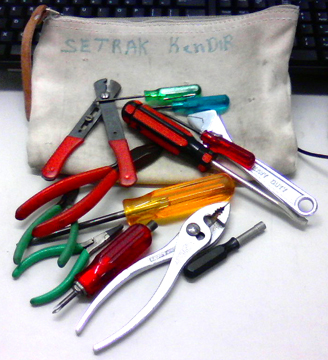
Such a tale of remorse, I'm sad to say. I didn't give up hope easily. I recounted every step of every day since I last saw you. I searched all the likely and unlikely places. I remembered taking you out of my trunk to make room to load something in. I distinctly recall saying to myself 'this isn't a good idea.' I'd better put you back in immediately. I swore I did just that. Where could you be?
I thought for hours trying to extract some clues from my brain. I had some great ideas. None of them bore fruit. So, I waited and waited, like everyone else who has been in this situation, and said 'Oh, it will turn up.'
The next day I grew solemn. I began to resign myself and give up hope. Never would I see you again. All the places we had been, through decades of jobs and strange situations, all over the country and all over the world. The pieces were assembled, found and adopted in the strangest of ways. I even found one piece dropped in the middle of a road one day. 'Easy come, easy go' was my rationale. Parting would not be so easy!
Some stories about your history will never be known. Brand new, you were first owned by a young man of Cypriot descent named Setrak Kendir. He preceded me the year before I started a new job in 1985. His name remains as a reminder on your cover. Nearly 30 years later, I can only wonder where he may be, but his signature lives on in perpetuity.
Days passed and I came to a realization. I just couldn't work without my old friend. I needed a 'Plan B.' If I ordered every last missing part, it would take weeks to get delivery. Some things were so old they were beyond exact duplication.
I delved into my basement and I was amazed how much I could amass. I couldn't believe how much I did find. I even found a pouch quite similar but, of course, not quite as good. This collection sufficed for a couple of days. I still wasn't ready to let go. No, not yet.
The loss of my old pals only made me appreciate just how familiar they had become. With my backups, I could still achieve almost everything, but it just wasn't the same. I missed the perfect feel in my hands, the colors of the collection and how everything combined to make a team. Never more?
Maybe I could plea for help. Signs were posted in all the possible places of departure: LOST. Would someone please have pity upon me and return my loss as fast as can be? I need them to do my work. There were no replies, only silence. The sadness was joined by frustration and even a little anger. 'How could I have lost something so essential to my existence?' I just hate losing things, especially ones I regularly use and need.
Another morning arrived with more gifts of recollection. My big blue carry-all bag still felt unusually heavy. I took a moment, just before work and looked once again to see what was inside.
Angels must have heard my pleas. Tucked invisibly behind a fold of my bag, it magically appeared! All I could say, over and over again was 'Wow!' As my Mother used to say 'If it had been a bear, it would have bit ya!' Reunited, I gained a new light to my step. How did I overlook something so obvious? Was my mind so careless? Am I getting that forgetful and old? Was I blind from emotion and loss? It didn't matter. There they were. My tools once again would be in my hand ready to do work in old familiar ways. Oh, happy day.
Saturday, July 7, 2012
Knowing What I Know Now

Shawn Colvin’s new memoir reads more like the transcript of
an extended radio interview than a legitimate book. It is a casual collection
of every on-the-road war story Shawn can remember and then some. Reading this
quickie chronicle will reveal all sorts of nuggets relating to her vast catalog
of songs and how they all came to be. For devotees of Ms. Colvin, (count me in,)
you’ll enjoy this fascinating stuff.
The book’s unifying thread, of course, is Shawn’s spider-web
of a life. It’s been a rocky road, indeed. You’ll hear all about her many
lovers, her encounters with nearly everyone she ever admired and her challenges
being a mother. At times you may be turning your head away slightly as the
detail becomes thick and murky.
On several occasions, I found myself thinking ‘too much
information!’ Comments regarding her oral gratification of her husband and how
her daughter discovered her private parts were a little out of the scope of
what I would expect. Like a bad lounge comic, I thought Shawn was reaching
towards the outrageous just to make the book more credible, commercial or maybe
just to keep our attention. It wasn’t necessary. There are much better details to ponder and digest here.
One part of her life story was quizzically missing. I always
thought that Shawn had a very strong friendship with Mary Chapin Carpenter.
Back in the 1990s, the two of them seemed inseparable like close sisters.
Nearly nothing was mentioned here about Chapin. The only inclusion was a small
picture of the two of them in the back of the book. Is this omission the one
part of Shawn’s life she doesn’t want to talk about?
‘Diamond in the Rough’ is not a polished work of a great
writer. It is a stream of consciousness journal of a very, very talented
songstress. I saw Shawn Colvin a couple
of weeks ago at a beautiful venue in Connecticut
Bring A Mallet

Ladies and gentlemen, I am here to tell you that it can
be done! The Western Digital My Book Live can work with a Mac computer. If you
try really, really hard and show the determination of an Iditarod husky dog,
you can reach this place in Nirvana. I have seen it! I have been there!
Honestly, it can be done!
Please don’t let me lead you astray. This goal is not easy to attain. You have a lot to learn. First, master the meaning of the little LED built into the front panel. Idle drives are blue. Yellow means its loading or waking up. Actually working? It glows green. Flashing green? Oh, boy! It’s really working and working hard.
I’ll save you some time. Many, many, many reboots will be needed for the drive to even appear as a wireless asset. Your Airport will be waiting a long time for a landing if you don’t. You might want to use a utility program to see when the drive finally starts breathing. This will prompt you when you have a fighting chance to begin.
Use the enclosed support file CD only to initially reach the unit. Load the very latest software immediately. Oh, but here’s a catch: The only way to do this with grace and style is to use a Windows computer to do it. Macs running OS 10.6.x just won’t easily go there. Go ahead. Cheat. Use a Windows PC!
After you reach the drive, look for the feature that allows you to revert to factory defaults. Use it! This is especially true if you have received a replacement drive as a warranty swap. My first My Book Live died after about four month’s use. The new drive I received came completely loaded with a full 3 terabytes of data. I had to wipe it clean before I could even start. The WD technical support representative I worked with on-line was named 'Mallet.' I know there was a hidden meaning here.
When you attempt your first Time Machine backup, turn off all settings on your Mac that might put the computer into sleep mode when idle. The initial backup will take a very, very long time. I have three Mac users in my house. I averaged about 18 hours per initial backup! After that, the system only backs up new information, so its activity is gleefully shorter.
The My Book Live is a nifty device on paper. Combine an unimaginable amount of storage with a Wi-Fi interface, and you can enjoy a very useful backup solution available, anywhere in your home or office at a moment’s notice, without having to plug it in or boot it up. It waits for your use. What a wonderful thing!
What it doesn’t do is stay on-line. Without the latest software, it will not respond resulting in on-screen messages that the drive is unavailable or has an OS incompatibility. Past that point, I tried several times for a full initial backup. Hours of painstaking drive activity later, the Mac or drive might unexplainably halt ruining your day. It’s so frustrating! Another hint: Always log-in as 'Guest.' The name and password you established will never work. Mallet told me so.
Find your way through all these steps and idiosyncrasies and you may have a plan. I have been there twice. After the system begins to work, it really is a useful device. Unfortunately, most mortal humans won’t invest the time to find out. It is a shame that a clever product like the My Book Live doesn’t include support software for easy set-up and operation. Western Digital is so close but yet so far away.
Wednesday, June 6, 2012
Yum!

Look back to Oyster Bay, Long Island in the late 1950s. Walk down South Street, walk past Snouder’s Drug Store and make a left on Audrey. Pass the movie theatre and on the left side of the street, at the end of the block, you’ll find a little wooden stand. If you are really lucky, the guy who makes the ices would be there. Single cups were a nickel…maybe a dime. Nothing could be more satisfying as a quick snack going to or from the beach.
This was a time of simplicity. There were no computers or iPhones, no air conditioners and the TVs were black and white. You had a choice of six or seven channels and you could watch your favorite shows for free. Who needed more than Rocky and His Friends? You entertained yourself playing stick ball with ‘Spauldeens’ or chasing the kid next door. Equally simple and simply perfect, lemon ices were a rare treat that fit right in.
Now the world is complex, noisy and continually immediate. No need to send away box tops or save green stamps for a special prize. Letters no longer require a mailman and a barking dog to announce their arrival. No one waits for anything. Gratification must be immediate. Slow down! You move too fast! You’ve got to make the morning last! If only I could go back in time. Well, I can!
Imagine my delight when I discovered that the little snack stand in Oyster Bay still exists! Could it be? They still sell snowy lemon ices sweetened with juice and dotted with pits! The Bonanza family continues the tradition that made us delight and smile. If you ever visit the North Shore of Long Island, make a point of driving by and enjoying the delicious fresh taste. It’s magical and delicious! Close your eyes and its 1958 again!
Read all about it at: http://bonanzasitalianices.com/ Happy summer!
Sunday, January 29, 2012
O Canada!

The second largest country in the world, home to 35 million people, is just north of the United States. Most of us know so very little about it. As omnipresent as it may be, Canada is a mystery to most of us. Outside of stereotypes of Mounties riding horseback in red uniforms, hockey players and vast lands of snow and igloos, Americans are often blind when looking north.
I have discovered Canada! I have become fascinated with our neighbor and its cultures. Although dominated by British and French influences, aboriginal people have lived here for thousands and thousands of years. Their heritage is rich and quite varied, composed of many different tribes each holding a legacy all their own. Include everything Canada’s worldwide immigrant population has added and you’ll find a cornucopia just as diverse as America’s but with a personality all its own.
Canadian broadcast media offers so many interesting alternatives to what we regularly watch and listen to in the fifty states. Three English-speaking networks dominate television offerings for Anglos: the publicly-funded CBC, BellGlobemedia’s CTV and Global. All three present a combination of Canadian and American shows. CBC peppers its schedule with British material, as well, such as Coronation Street. The advent of the Internet and streaming video has made access to Canadian TV and radio easier than ever before. Americans would enjoy a refreshing sample of the Canadian point-of-view.
Canadian news broadcasts seriously consider not only events in Canada and America but the entire world. Entertainment programming is just as fresh. Would you ever expect to see a show called ‘Little Mosque on the Prairie’ on AmericanTV? You wouldn’t believe how entertaining and eye opening this one show has become up north. Another Canadian gem is the dramedy ‘Being Erica’ that recently completed its fourth and final season on the CBC. Set in Toronto, the show received critical acclaim,earned huge audiences and became the most popular show on Canadian TV. It’s all about a woman in her thirties, (played by Alberta-native Erin Karpluk,) who finds herself a therapist with the ability to send herback into her past allowing her to change everything she regrets. The writing is fresh and intellectual and does not depend on violence and intrigue to be entertaining. Distributed worldwide by the BBC, a secondi ncarnation of ‘Being Erica’ is now in development as a new show for ABC-TV stateside. If you can’t wait, the first three CBC seasons are available free on demand at hulu.com.
Three Canadian news shows are worthy of your review: CTV presents ‘Canada AM,’ a three hour newsmagazine seen on-line at: http://www.ctv.ca/canadaAMPlayer/index.html in beautiful 16x9 HDTV quality. Be sure to also check ‘Jeff’s Videos’ for some amazing footage found on the Internet. Be aware that the weather reports include temperature readings in centigrade. It’s not that cold up there! The hard news CTV National News with Lisa LaFlamme is also worthy of your attention at: http://www.ctv.ca/ctvnews/.CBC’s ‘The National’ is a daily hour-long gem with thoughtful analysis and discussion anchored by Peter Mansbridge. A truncated 10 minute version is available on iTunes.
CBC Radio offers a nearly endless supply of programming for every taste. Use Internet Explorer and go to: http://www.cbc.ca/radio/#. Click ‘See what is playing on all live streams’ and it will reveal dozens of different program choices being broadcast to distinct regional areas all over Canada. CBC Radio podcasts are easily available via iTunes or at: http://www.cbc.ca/podcasting/. You could spend years sampling the hundreds of different programs they offer. It’s quite a course in all things Canadian! One Canadian radio show has also captured my fancy. CBC Radio’s ‘Q’ with Jian Ghomeshi is a nationwide phenomenon covering the world of entertainment, arts and culture. Jian’s well-produced and fast-paced show attracts the biggest names in show biz. You’ll delight following his ability to create insightful interviews and commentary that surpass most everything I have ever heard. Many memorable live performances season his already delightful show. ‘Q’ is now being distributed in the United States via Public Radio International and can be heard on WNLK-AM 1350 Norwalk, CT at noon and 7pm weekdays. Free audio and video podcasts of his material can be found on iTunes and on the show’s web site: http://www.cbc.ca/q. CBC’s Radio One is available 24/7 on Sirius satelliteradio channel 159.
My favorite of all media from up north is the independent channel known as NTV from St. John’s, Newfoundland. Here you will see what life is like in Newfoundland and Labrador in a homemade style all their own. A low-powered TV station outside of Tampa, Florida rebroadcasts NTV for all the ‘snowbirds’ who vacation down there. In turn, the Tampa station can be seen via the Internet at wpso.com. Three times a day you can see NTV newscasts: 7 to 8:30 am, 10:30 to 11am and 4:30 to 5 pm. There is also much more to be seen on demand at www.ntv.ca. If you are a certified TV DXer, once in a blue moon you can see NTV directly via e-skip on analog channel 4! If you are looking for something fresh and new or just seeking a new perspective, take a gander at all Canada has to offer. There is so much to see and hear and it’s all free and on-demand. Take a look! (see picture above!) You may find some wonderful and entertaining shows that you never knew existed. It’s all waiting for you and just a mouse click away. Pass the Molson, eh?
Monday, January 23, 2012
R.I.P.

At least I had a long life !
See: http://www.sysoon.com/deceased/karl-zuk-237
May I rest in peace - Karl
Thursday, September 22, 2011
Stormy Weather

Let's have a hurricane this weekend! It seemed like a novel thought. Hurricane Irene had been sitting in The Bahamas stalled like it was stuck in New York City traffic on a Friday night. It wasn't until the morning of Saturday, August 27, that it finally made land in North Carolina and Virginia.
The media hype was unprecedented. New York City television stations began non-stop coverage of the storm that lasted all weekend. Radio stations had dropped music programming and were simulcasting their all-news sister stations or television audio. Irene was not just a hurricane. It had become a major media event.
Here at home, we responded with a little more sanity. All the outdoor deck furniture came in along with all the plants and anything else that might go airborne. I made sure the gutters were cleaned out and all the windows were secured. Our seasonal in-window air conditioners were temporarily removed. We filled our largest bathtub with water along with other jugs and vessels. I gathered all the flashlights and brought out my cache of D batteries. Prepared and anxious, it was time to sit and wait.
Saturday afternoon, I called my boss at work and said I would not be in on Sunday. I was not about to leave my wife and kids alone at home just to log another day at work. The sky was remarkably clear. It was a beautiful day with sunshine and warmth. Later in the afternoon, the first signs became more and more obvious. The air became thick with humidity. It was going to be a bumpy night.
The rain began around 8 pm or so. From past experience, I knew the power would go out. It was just a matter of when. Living in the country, at the very end of a power leg, we lose power a couple of times a month as a rite of passage. No question. We were going to be sitting in the dark. My roof was also likely to donate a shingle or two to major storms. Que sera sera.
By ten o'clock, Irene had become a full-forced blustery rain storm. The wind howled outside sounding like a huge train going by that never ended. Short periods of calm would turn back to more powerful gusts. Exhausted, I fell asleep around 11 pm. The winds woke me up several times during the night. I noticed that some lights around the house were left on but I was too lazy to turn them off.
As the night progressed, I began to think we might escape a blackout. I stirred again around 2:55 am to see the lights flicker. Miraculously, they stayed on until about 3:05 am. With a bump, the big switch had opened somewhere. We were in black and would stay that way for a long time.
One thing I noticed, that I found very odd, was the brightness of the sky. All night it appeared to be lit in gray with the low light you would expect just before dawn. When dawn came, the storm was still flailing around at full force. I became annoyed wondering when it would cease. I was glad to see that no major branches or trees had fallen nearby and all the cars were safe. The elasticity of the tree branches amazed me. Trees really know how to swing and sway when they have to.
I had been listening to the radio all night. WCBS 880 was doing great coverage. WEPN 1050 was simulcasting the audio of the non-stop coverage from WABC-TV Channel 7. This was the first major storm that reminded me that we had transitioned into the digital age. I no longer had a way to watch TV with a battery operated set. All my portable equipment was analog.
Dawn came and the sky became a little brighter. The storm was relentless. In mid-morning, we experienced the eye of the hurricane passing over us. The radio stations commented that the eye was to pass right over Danbury, Connecticut and head north. The calm of the eye did arrive for about 20 minutes or so. The storm then returned, but only for a little while. By noon, it seemed like the worst of the storm was over. No power! We were still in the dark.
It was now about 3 pm on Sunday and I thought it might be time to venture out and see what had happened. I was thrilled that our house was completely dry and unscathed. The air was filled with a very strong scent of freshly broken branches. If you have ever trimmed a healthy maple tree, you know this smell. Amplify it about 100 times and you would understand what we experienced. The world smelled wet and woody. Our deck now had a carpet of small broken branches and leaves. Amazingly, not one of my antennas came down! We swept and scooped for awhile and then looked beyond our house.
The cause of the power outage was obvious. A large tree had fallen across our road pulling the utility wires nearly down to the ground. My daughters and I ventured into the car and went to explore. I was amazed how quickly the emergency crews were slicing up enormous trees and limbs to make roads passable. The electric crews were also scurrying to rebuild their entire infrastructure. Every power line looked like it had been grabbed and tossed by Godzilla.
Huge trees succumbed to severe twisting and snapped mid-trunk. There were so many power lines and other utility cables all over the ground. Many roads were impassable because of downed trees, flooding or work crew trucks. Our automobile movements were slow and cautious. The adventure had just begun.
Without power everything stops at my house. Life just isn't the same without it. The well pump requires power. No water means filling up toilets manually. We made many, many trips down to the swimming pool with water jugs! Fresh water was retained in our bath tub. This lasted for about three days. In contrast, the power came on quickly near where I work. The Connecticut food stores had plenty of water. I became a hero carrying large jugs of water back to our part of the world. All of our nearby stores were either blacked out and closed or had long been sold out of water.
No power also means no lights. D size batteries became an important item. I was amazed just how long our Coleman lanterns stayed on. We used them for four nights without a battery change. Our solar-powered garden and lawn lights became very handy helpers to our night vision.
I also had to get ready for work in the dark. I had lanterns and flashlights but I had no water. Armed with half a gallon of water, I could once again employ the techniques of bathing learned and developed while I was convalescing after I broke my leg. No problem! I even had neighbors come over with buckets and such to bring home my pool water for their bathroom needs. It was survival of the fittest: Everyone who could cleverly adapt!
Charging devices off-site became a daily routine. With plenty of power at work, I charged my computer (so we could watch DVD movies at night,) checked my e-mail, and made sure my phone and iPod was fully charged. Wi-Fi at work provided a way to sync up my iTunes with new content so I could watch the news at home. Public libraries also became asylums for the electrically challenged. People were eager to use library's free Wi-Fi and A/C power while they waited for their own lights to come on.
One of my friends had the right idea. A friend of his, from Rockland County, drove over to bring him a spare small generator. Since he was a DirecTV subscriber, as soon as he had a source of power for his satellite receiver and flat screen, he was back in business! The refrigerators and the TV was all he needed! Other friends with Cablevision had to wait until their A/C power was returned - and - their cable service was restored!
Every community seemed to be offering their constituents dry ice and pool water. Crowds would gather every time a notice or sign went up. 'Pool water free!' 'Ice today at 3 pm!' Ice was a precious commodity. Without electricity to run their refrigerators, residents were lining up to get dry ice and grew disappointed and/or annoyed when the ice did not arrive on time or there was not enough to meet everyone's needs. Pool water was just as important. People really started to appreciate what a wonderful thing fully-working indoor plumbing was!
I did not envy the telephone receptionists at our local power company NYSEG. They received a constant barrage of demanding calls as their repair crews worked night and day to rebuild their infrastructure. Trucks had arrived from dozens of states and provinces to help with the project. I saw crews from Michigan, New Brunswick, Maine and The Carolinas. The construction was impassioned and endless. I wonder when they slept. Every new repair completion brought more happy faces. These men need applause and recognition. They were our constant heroes for days and days.
Progress was being made but each passing hour felt longer and longer. On Tuesday afternoon (day three,) my wife and daughters traveled 90 minutes each way to a friend's mother's house in New Jersey just to take showers! What a treat! We also got into a routine of searching out restaurants that were open for dinner so we could have a 'real' meal once a day. We ate a lot of peanut butter and jelly sandwiches! I was amazed how long the refrigerator stayed cold, but by Tuesday we had to dump its' entire contents into the trash.
Wednesday night (day four,) we anxiously waited for the power to come on. Other families in our neighborhood had been restored, but we are in the back woods and away from the main power lines so, for us, the blackout continued. My family went to a friend's house to enjoy their newly restored power. I was home alone and fell asleep in the dark. Around 10 pm, I felt a breeze on my legs and I opened my eyes. My fan was on and so were my lights. Whoo-hoo! The power was back on!
I immediately took a shower just because I could. In the days following, we continued our outdoor cleanup. We were so relieved that our adventure was over. Some of neighbors had to be doubly patient. There were homes in nearby North Salem that did not regain power service until a day or two past Labor Day. Hurricane Irene put even more punch into parts north. Vermont and Upstate New York were particularly rampaged with severe flooding. Quebec and parts of Maritime Canada also took a beating.
Now it is all over. It left us humble and thinking. How did our ancestors survive without all our modern necessities? We now appreciated three most cherished items: pool water, ice and D batteries. Propane for barbeque grills and generators also was high in demand. The only thing I'll miss is the amazing star-filled skies at night. Be glad for what you have and remember that every day is a gift!
Subscribe to:
Posts (Atom)